
Choosing a hearing aid is about more than the device. It’s about how that technology supports your conversations. At Harbor Audiology & Hearing Services, we help you figure out what makes the most sense for you and your routine. We also make sure the fit matches how you actually spend your time.
Our audiologists works with a wide range of options, including rechargeable models and those with direct smartphone streaming, so your hearing health aligns with your routine.
What to Consider When Choosing a Hearing Aid
Selecting a hearing aid is a personal decision shaped by more than just hearing ability. It often comes down to how the device feels, how it looks and how well it fits into your routine.
A few things to consider include:
- Amplification needs: The level of power required for your hearing loss.
- Flexible options: Identifying solutions that match your budget.
- Cosmetic preference: Whether you prefer a nearly invisible fit or a more accessible design.
- Physical comfort: History of skin sensitivities or ear canal shape.
- Manual dexterity: Your comfort level in handling smaller parts and batteries.
- Primary environments: Where you spend most of your time, from quiet homes to noisy restaurants.
Hearing aids are available in several designs, each with its own advantages. Some prioritize durability, while others are designed to be barely noticeable. With modern advancements, it’s easier to find a style that feels like a natural part of your day rather than something you have to work around.
Types of Hearing Aids
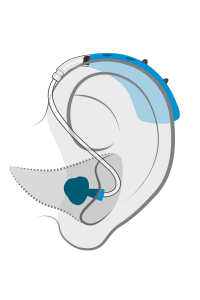
Behind the Ear (BTE)
Powerful, Adaptable Technology
BTE hearing aids are known for their strength and flexibility. They can support a wide range of hearing loss, from mild to profound, and are often chosen for children since they can better accommodate growing ear shapes. Their slightly larger build also allows for easier control adjustments, more fit customization and extended battery performance.
Features and Benefits
- Easier grip and handling compared to smaller styles
- Offers a wide range of features and flexible sound programming options
- Space for larger batteries or rechargeable components
- Compatible with wireless streaming and accessories
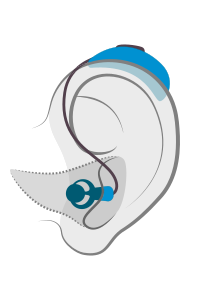
Receiver in Canal (RIC)
Comfortable, Flexible and Versatile
RIC hearing aids combine a low-profile design with a snug fit and clear sound. A small receiver sits in the ear canal, linked to a lightweight piece that rests behind the ear, keeping the overall look discreet. Because of their flexibility, RIC devices work well for a wide range of hearing loss.
Features and Benefits
- Slim profile that sits comfortably behind the ear
- Reduced occlusion for better sound quality
- Suitable for a wide range of hearing levels
- Connects easily to phones and other devices
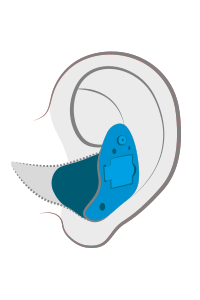
In the Ear (ITE)
Power and Comfort for All-Day Wear
ITE hearing aids are shaped to fit your ear and work with its natural acoustics to help increase sound. Because they’re custom-molded, they sit in the outer ear and are easy to clean and adjust. Their size and design also make them an option for people with mild-to-severe hearing loss.
Features and Benefits
- One-piece design with no external tubing
- Larger surface allows for manual controls
- Custom fit based on your ear’s shape
- Supports wireless connectivity features
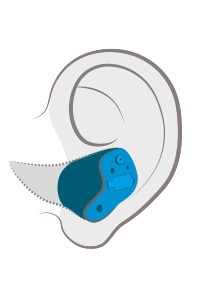
In the Canal (ITC)
Advanced Features in a Discreet Package
ITC hearing aids are a bit larger than canal-style options, which can make them easier to handle, while remaining discreet. They also support a variety of features, and many models include volume control and directional microphones to help you adjust to different listening environments.
Features and Benefits
- Easier to handle than smaller in-canal styles
- Custom molded
- Can include directional microphones
- Works well for mild-to-moderate hearing needs
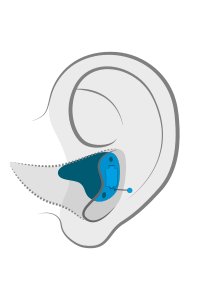
Completely in Canal (CIC)
Discreet and Direct Sound Delivery
CIC hearing aids are custom-fit to sit deep in the ear canal, keeping them low-profile once worn. Their position allows them to use the ear’s natural shape to pick up and carry sound more directly. They’re generally used for mild-to-moderate hearing loss and are often selected by people who want a smaller device that fits easily into their routine.
Features and Benefits
- Small size keeps the device out of view
- Custom fit helps keep the device secure
- Less exposure to wind compared to outer-ear styles
- Bluetooth and wireless options
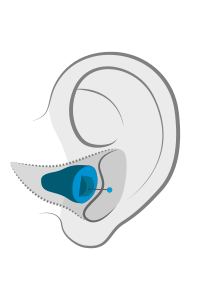
Invisible in Canal (IIC)
Out-of-Sight Sound Amplification
IIC hearing aids are the smallest style available, designed to sit deep in the ear canal for a very low-profile fit. Each one is custom molded to the wearer’s ear, using the natural shape of the ear to help direct and amplify sound. They’re typically chosen by people with mild to moderate hearing loss who prefer a nearly invisible option.
Features and Benefits
- Designed to stay in place during activities
- Low-profile design that’s hard for others to notice
- Helps limit common feedback issues
- Bluetooth and wireless connectivity for easy pairing with devices
